Understanding Flat Unhappy Icon, Button Set and Color Unhappy Icon, Button, Symbol Set
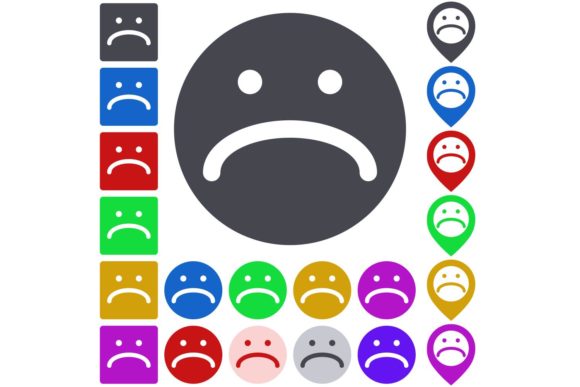
In the world of digital design, visual elements play a crucial role in communication. Among these, icons and buttons are essential tools for conveying emotions, actions, and messages effectively. One such set that has gained attention is the Flat Unhappy Icon, Button Set, along with the Color Unhappy Icon, Button, Symbol Set. These sets come in various shapes—square, circle, and pin—and are available in high-resolution formats like JPG 5000x5000 and vector EPS. This article explores what these icon sets are, their purpose, and how they can be used in different contexts.
What Are Flat Unhappy Icons and Buttons?
The Flat Unhappy Icon, Button Set refers to a collection of minimalist, two-dimensional icons and buttons designed to represent a sense of dissatisfaction or negative emotion. Unlike traditional icons that may use gradients or shadows, flat design focuses on simplicity, clean lines, and limited color palettes. These icons are often used in user interfaces (UI) to indicate errors, warnings, or other negative states.
Flat unhappy icons typically feature simple shapes, such as a frowning face, a red circle with a diagonal line, or a downward arrow. The button versions of these icons are designed to be interactive elements, allowing users to perform actions like canceling a task or rejecting an option.
The Role of Color in Unhappy Icons and Buttons
While flat design emphasizes minimalism, the Color Unhappy Icon, Button, Symbol Set introduces a more vibrant approach. These icons use bold colors, such as red, orange, or dark blue, to convey strong emotions. The use of color makes these icons more eye-catching and effective in drawing attention to important information.
For example, a red "X" icon might be used to signal an error, while a yellow triangle with an exclamation mark could indicate a warning. The symbol versions of these icons are often used in signage, instructional materials, or software interfaces to communicate messages quickly and clearly.
Variations: Square, Circle, and Pin Shapes
One of the key features of these icon sets is the variety of shapes they offer. The most common shapes include square, circle, and pin styles. Each shape serves a specific purpose and can be used in different design contexts.
- Square Icons: These are ideal for UI elements that require a structured layout, such as buttons in a mobile app or web interface. Their rectangular shape allows for easy integration into grids and menus.
- Circle Icons: Circular designs are often used for status indicators, such as loading animations or progress bars. They provide a soft, rounded appearance that is visually appealing and easy to recognize.
- Pin Icons: Pin-shaped icons are commonly used in maps, location-based services, and navigation tools. They are designed to stand out and draw attention to specific points of interest.
Applications in Modern Life and Work
Unhappy icon sets have practical applications across various industries and daily activities. In business, they are used in dashboards, reports, and analytics tools to highlight issues or areas needing improvement. For example, a sales dashboard might use a red icon to indicate a drop in revenue or a failed transaction.
In education, these icons can be used in e-learning platforms to signal incorrect answers or provide feedback. They help students understand their progress and identify areas where they need to focus more.
In technology, unhappy icons are essential for user experience (UX) design. They help users navigate complex systems by providing visual cues about the status of their actions. A poorly designed icon set can lead to confusion, while a well-designed one enhances usability and reduces errors.
Choosing the Right Format: JPG vs. EPS
When working with icon sets, it's important to choose the right file format based on the intended use. The JPG 5000x5000 format is ideal for high-resolution images that need to be displayed on screens or printed at large sizes. It offers excellent quality and is widely supported by most design software and web platforms.
On the other hand, the EPS (Encapsulated PostScript) format is a vector-based file type that allows for scalable graphics without loss of quality. This makes it perfect for print media, logos, and illustrations that require precise details and flexibility in resizing.
Design Considerations for Effective Communication
Creating effective unhappy icon sets involves more than just choosing the right shape or color. Designers must also consider factors such as consistency, scalability, and cultural relevance. A consistent style ensures that all icons in the set look cohesive and professional, while scalability allows them to be used in different sizes and resolutions.
Cultural considerations are also important. Symbols and colors can have different meanings in different regions, so it's essential to research and understand the context in which the icons will be used. For example, the color red may signify danger in some cultures but luck in others.
Common Misconceptions About Unhappy Icons
Despite their usefulness, there are several misconceptions about unhappy icons and buttons. One common misunderstanding is that they should always be used in a negative context. However, these icons can also be used to highlight opportunities for improvement or to encourage users to take corrective actions.
Another misconception is that flat design is less effective than more detailed styles. In reality, flat design can be just as powerful when used correctly. Its simplicity allows for faster processing and easier recognition, making it ideal for modern digital environments.
Conclusion
The Flat Unhappy Icon, Button Set and Color Unhappy Icon, Button, Symbol Set are valuable tools for designers, developers, and businesses looking to communicate emotions and actions effectively. With their versatility in shapes, formats, and applications, these icon sets can enhance user experiences, improve clarity, and support better decision-making in various fields.
Whether you're designing a mobile app, creating educational content, or developing a business dashboard, understanding the purpose and use of unhappy icons can help you make informed design choices. By considering factors like consistency, scalability, and cultural relevance, you can ensure that your icon sets are both functional and visually appealing.